HSK 4 · Lesson 23 · A guest with a temper
Don't be angry, calm down a little! 别生气,冷静一点儿!
Each lesson is a short story in Mandarin with pictures and audio, the words and grammar it uses, and a talk with Xiaolu at the end. All of HSK 1 is free.
This lesson is in Plus. Start this lesson
- About 29 minutes
- 7 new words
- 2 grammar points
- A 3 to 5 minute talk with Xiaolu at the end
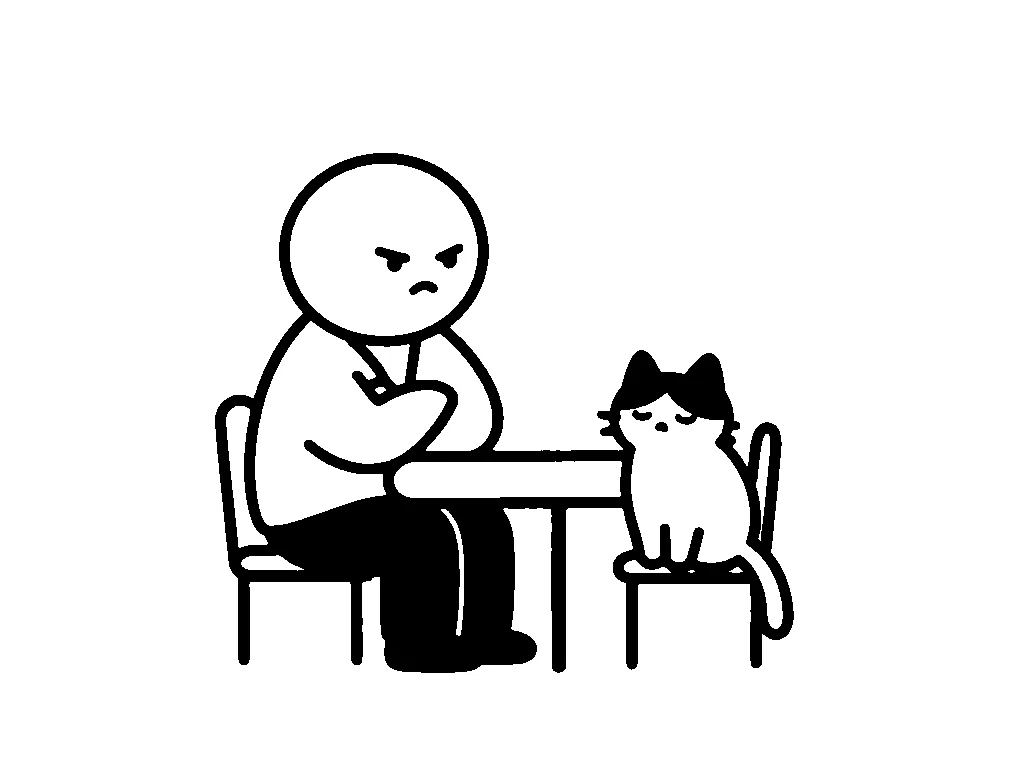
Who is in it
- Fei 林飞 Lín Fēi
- An'an 安安 Ān'ān
- Dawang 大王 Dàwáng
- Guest 客人
New words
- 发生 fāshēng to happen, occur
- 脾气 píqi temper (脾气好 / 发脾气)
- 冷静 lěngjìng calm, cool-headed
- 讨厌 tǎoyàn to dislike; annoying
- 受不了 shòubuliǎo can't stand it
- 吃惊 chījīng to be shocked, startled
- 失望 shīwàng disappointed
The story
At home, just before dinner
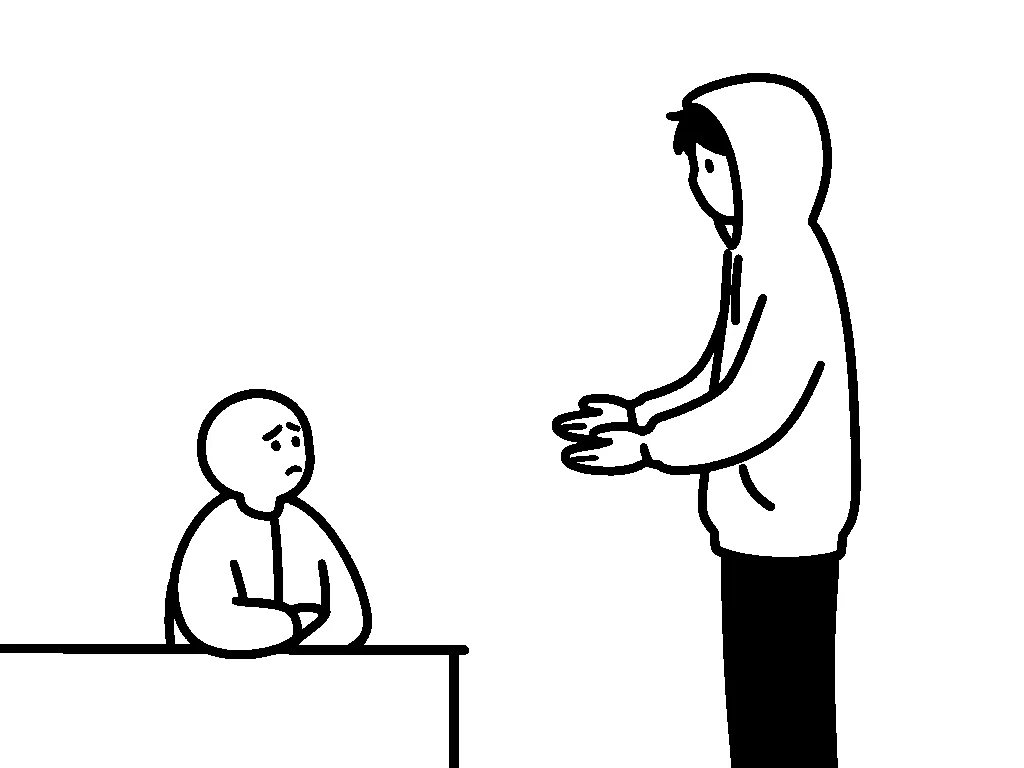
- Fei 发生了什么?
- Guest 我受不了了!我最讨厌等人!
- Fei 别生气,冷静一点儿!
- Guest 我不是生气,是失望!我等了一个小时了!
- Fei 你慢一点儿说。你几点来的?
- Guest 六点。现在……几点了?
- Fei 六点十分。你只等了十分钟。
- Guest 可是我觉得很久!我有点儿饿,脾气不好,我知道。
At the dinner table
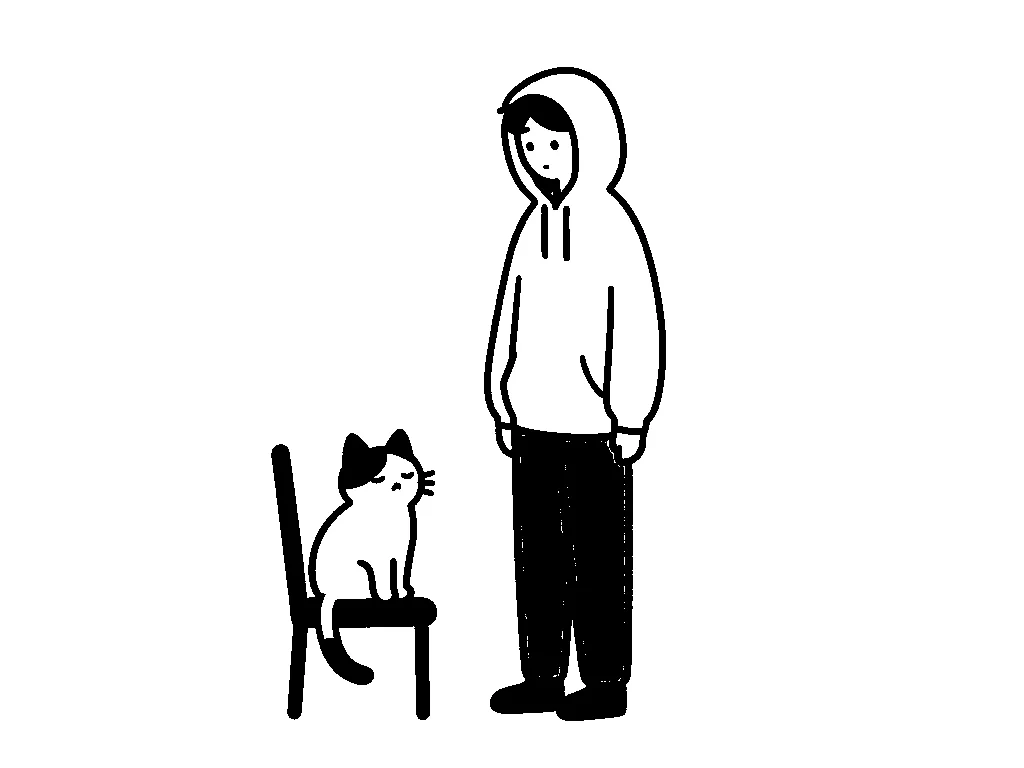
- Fei 你看大王,它多冷静!
- Guest 猫当然很冷静,它不饿。
- An'an 你的饺子十分钟前就好了,在桌子上呀!
- Guest 桌子上?我坐的这张桌子上什么都没有!
- Fei 安安,你把饺子放在哪张桌子上了?
- An'an 那张。我没说是这张呀。
- Guest 十分钟前就好了?我真吃惊!
- Fei 现在你知道了,我们去那张桌子吧。
At the other table, over the dumplings
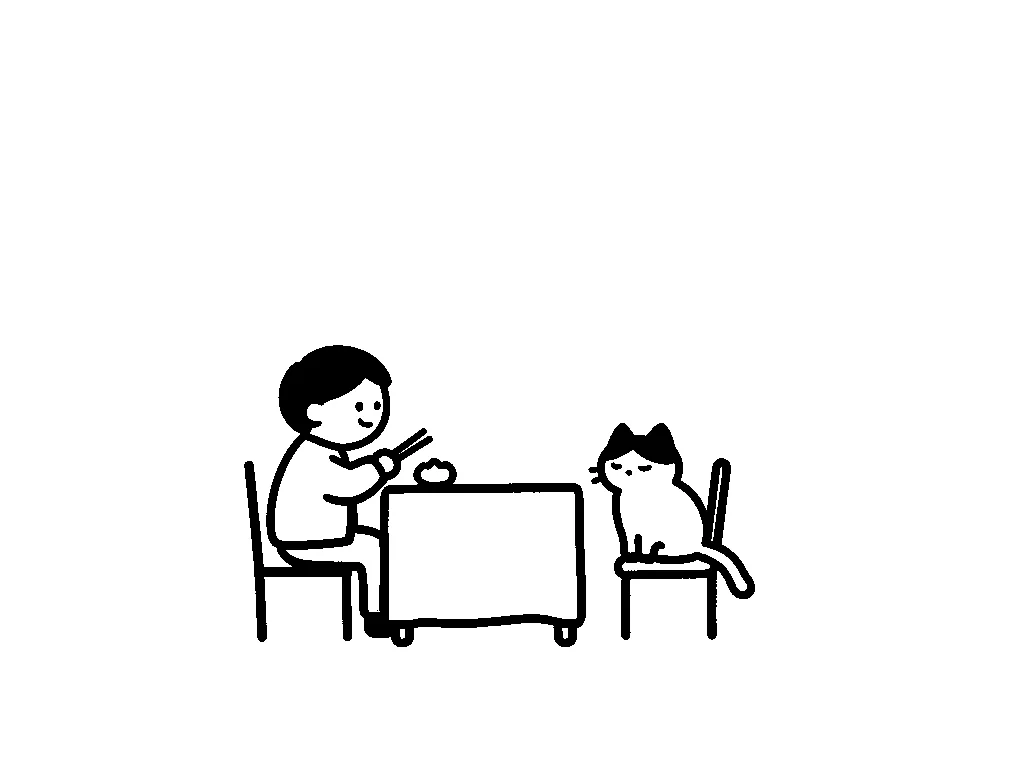
- Guest 对不起,我不应该发脾气。
- Fei 没关系。我也有点儿饿。
- An'an 饺子太多了,我一个人吃不了!
- Guest 我帮你吃!
- Fei 快一点儿,饺子还热着呢!
- Guest 有点儿咸,可是真好吃!我现在不生气了。
- An'an 你看,大王也来了,它一直很冷静。
- Guest 下次我要先冷静一点儿,再问饺子在哪儿!
An'an's notebook
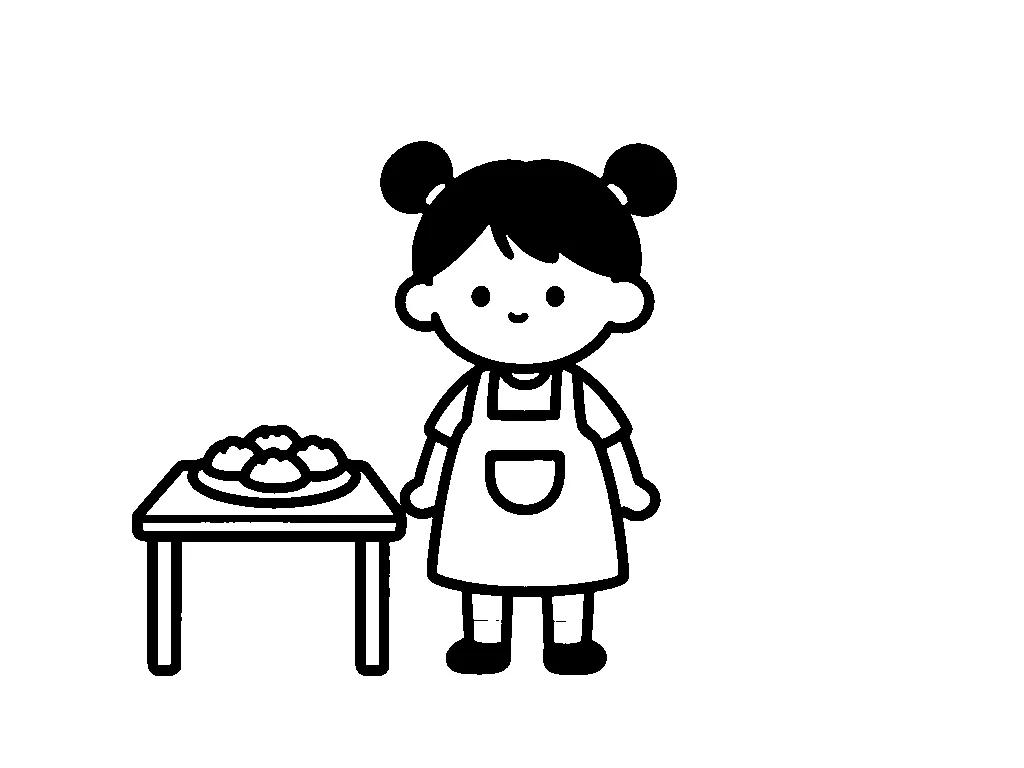
- 今天晚上,我们家发生了一件事情。
- 客人发脾气了,他说他受不了等人。
- 哥哥对他说:“别生气,冷静一点儿。”
- 客人说他不是生气,是失望。
- 他说他已经等了一个小时。
- 可是他六点来的,只等了十分钟。
- 饺子十分钟前就好了,我放在那张桌子上了。
- 客人没坐在那张桌子旁边,所以没看见。
- 后来他知道了,很吃惊。
- 大王一直在椅子上,它很冷静。
- 客人吃了很多饺子,不再发脾气了。
- 他说下次要先冷静一点儿。
- 我觉得他脾气不坏,只是有点儿饿。
Grammar
V + 不了 / 得了;来得及 / 来不及;受不了
Put 不了 after a verb to say you can't do it: 来不了, 吃不了. 得了 gives the positive or the question: 吃得了吗? 来得及 and 来不及 say there is still time or it is too late. 受不了 is a fixed form of this pattern: learn it as one piece.
- 还来得及,别着急。
- 来不了就打电话。
- 饺子太多了,我吃不了。
- 我受不了了!
有点儿 + Adj · Adj + 一点儿
有点儿 goes before an adjective and shows a small degree you don't like: 有点儿饿. 一点儿 goes after the adjective and asks for a small change: 冷静一点儿, 快一点儿. Don't use 一点儿 before an adjective for a small unwelcome degree; that is 有点儿.
- 我也有点儿饿。
- 别生气,冷静一点儿!
- 快一点儿,饺子还热着呢!
- 有点儿咸,可是真好吃!
Characters
- 脾 The flesh radical on the left shows 脾 was first a part of the body. 卑 on the right gives the sound. In 脾气 the word has moved on to mean a person's temper.
- 静 青 on the left gives the feeling of something clear and clean, and 争 on the right gives the sound. Together they mean quiet and calm, the opposite of a loud temper.
A saying
大事化小,小事化了 Literally: 'make a big matter small, make a small matter nothing.' People say it when a quarrel or problem is best settled calmly, so it shrinks and disappears, like an angry guest who calms down.
What you will be able to say
The lesson ends with a talk. You are a dinner guest who can't stand waiting, and Xiaolu is a calm helper in the family's home. Tell her what is wrong, say you can't stand waiting, and say how you feel.
- I can say I can't stand something with 受不了. 我受不了了!
- I can use 一点儿 after an adjective to ask for a small change, and 有点儿 before an adjective for a small unwelcome degree. 好,我冷静一点儿。
- I can say I am disappointed. 我不是生气,是失望。
- I can say what I dislike. 我最讨厌等人。
- I can say I am shocked by news. 我真吃惊!
The closing talk needs an account. On the free plan, the first lesson talk you take in each level is free; Plus and Ultimate use the month's Talk minutes.
This lesson is in Plus. Start this lesson