HSK 4 · Lesson 19 · Doors, bells and messages
This door is pull, not push! 这个门要拉,不是推!
Each lesson is a short story in Mandarin with pictures and audio, the words and grammar it uses, and a talk with Xiaolu at the end. All of HSK 1 is free.
This lesson is in Plus. Start this lesson
- About 29 minutes
- 7 new words
- 2 grammar points
- A 3 to 5 minute talk with Xiaolu at the end
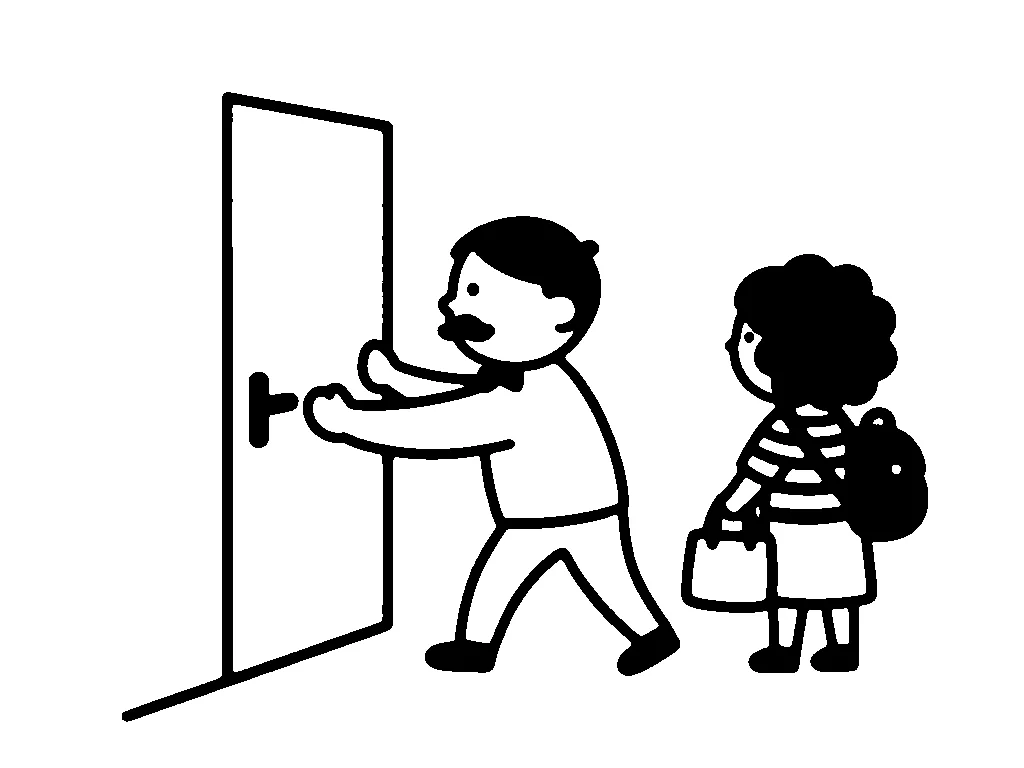
Who is in it
- Mia 米亚 Mǐyà
- Mr Lin 林先生 Lín xiānsheng
- Colleague 同事 tóngshì
New words
- 推 tuī to push
- 拉 lā to pull
- 响 xiǎng to sound, ring (电话响了)
- 留 liú to leave (a message), keep; stay
- 提 tí to carry (by a handle); to raise (a question)
- 号码 hàomǎ number (phone, room)
- 信息 xìnxī information, a message
The story
At the restaurant door
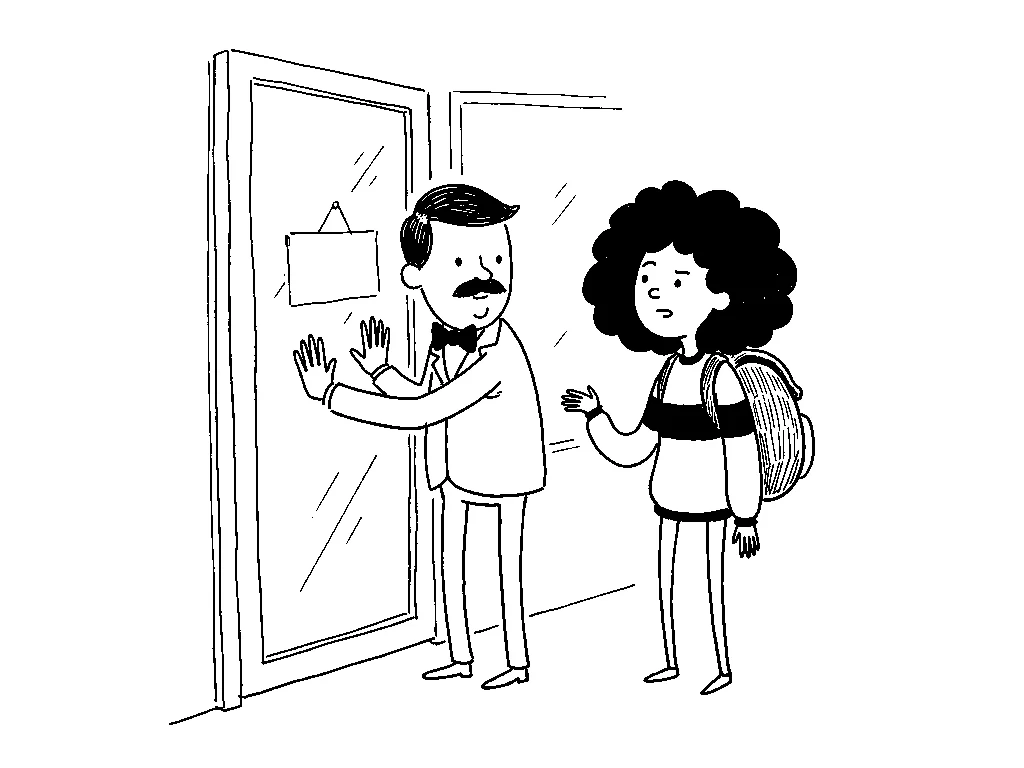
- Mr Lin 我去一下银行,一会儿回来。
- Mia 好,林先生,路上小心。
- Mr Lin 门怎么不开?我推了三次!
- Mia 这个门要拉,不是推!门上写着“拉”。
- Mr Lin 我知道,我每天都拉。今天它不一样了。
- Mia 你再试一下。
- Mr Lin 看,拉开了!
- Mia 对,这次拉对了!
- Mr Lin 好,我出去了!
- Mia 快去吧,银行快关门了。
Inside the restaurant, a few minutes later
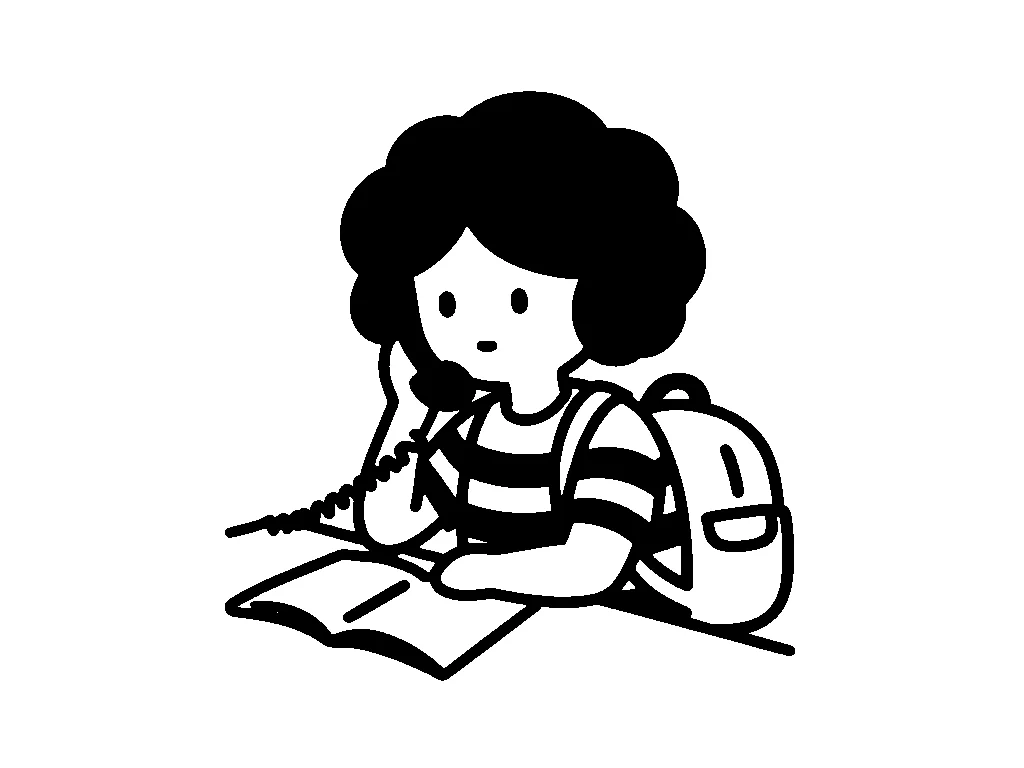
- Colleague 电话响了!
- Mia 是一个不认识的号码。
- Colleague 不认识的号码,别接。
- Mia 也许是找林先生的,我接一下吧。
- Mia 喂?林先生不在,您留一个信息吧。
- Mia 号码是六二四零九八三?好,我写好了。
- Colleague 你的笔记本上写着两个号码!
- Mia 一个给林先生,一个我留着。信息是银行留的。
- Colleague 银行?他已经去银行了!
- Mia 可是他的包还在桌子上!
Just inside the restaurant door, a minute later
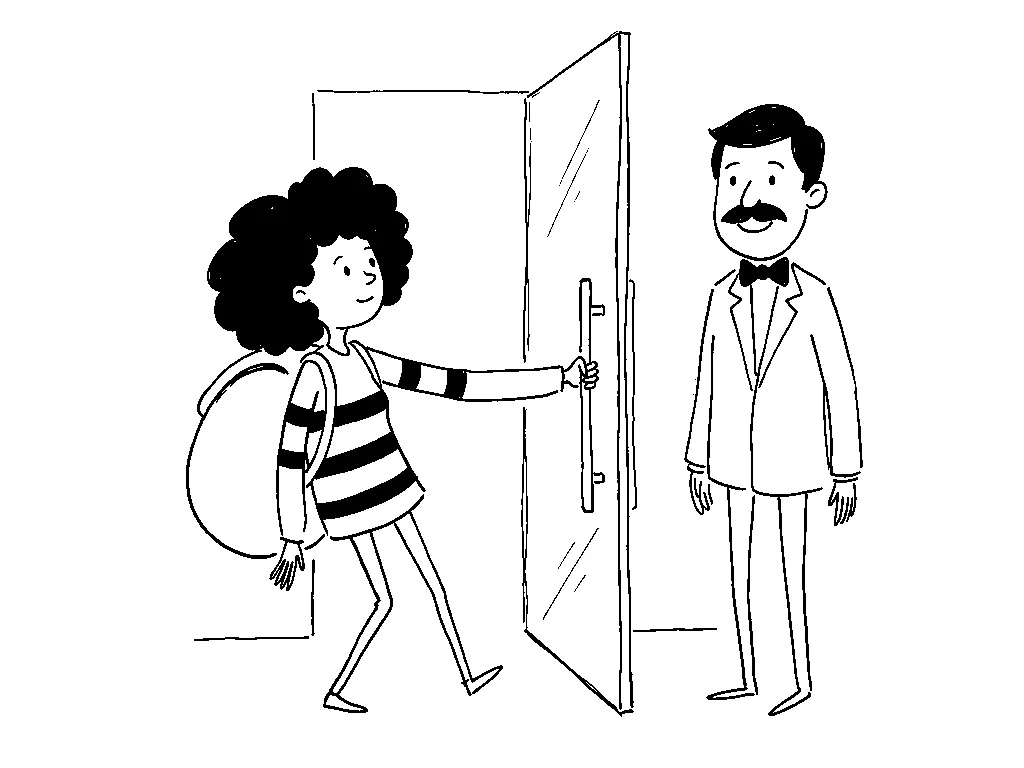
- Mr Lin 我回来了!我的包呢?我忘记带了!
- Mia 在这儿,我给你提着呢。
- Mr Lin 包里有我的钥匙和钱。谢谢!
- Mia 银行的号码和信息,我都写好了,放在你的包里了。
- Mr Lin 太好了。我走了!
- Mr Lin 门怎么又不开?
- Mia 你每天都拉,今天已经推了四次!我拉一下吧。
- Mr Lin 谢谢!明天出去的时候,我一定拉。
- Mia 好,我在这儿等你回来。
Mia's notebook
- 林先生要去银行,可是他推了三次门,门都不开。
- 门上写着“拉”,他拉了一下,门就开了。
- 他刚出去,电话就响了。
- 号码我不认识,可是我接了。
- 我对那个人说:“请您留一个信息。”
- 那个人说:“请林先生今天去一下银行。”
- 我把号码和信息都写在笔记本上了。
- 然后我看见林先生的包还在桌子上。
- 他回来拿包,我提着包出来给他。
- 林先生说谢谢,可是走的时候他又推了一下门!
- 我告诉他:“你已经推了四次,这个门要拉!”
- 我对他说:“明天出去的时候,你一定要拉。”
- 他笑着说:“好,我一定拉!”
- 不过我想,他明天也许还要推一下。
Grammar
V + 来 / 去 (出去, 出来, 回来)
A verb + 来 or 去 shows the direction of the move: 来 comes toward the speaker, 去 goes away from them. 出去 is to go out, 出来 to come out, 回来 to come back. A place object sits before 来/去: 回家去. Other complements work in a similar way: 拉开 is to pull open, 推开 to push open.
- 我出去了!
- 米亚提着包出来了。
- 我在这儿等你回来。
- 林先生拉开了门。
V + 着 (+ object)
V + 着 describes a state that keeps holding after the action is done: 写着 (is written), 提着 (is carrying), 放着 (is lying). It is not the action in progress; for that use 正在: 她正在写 means she is writing right now. To say what is written somewhere, put the place first: 门上写着“拉”。
- 门上写着“拉”。
- 我提着包出来了。
- 笔记本上写着两个号码。
- 桌子上放着一个包。
Characters
- 推 The hand on the left tells you it is done with the hand; 隹 on the right gives the sound. You push with your hands.
- 提 Again a hand on the left: you carry or raise something with your hand. 是 on the right only gives the sound. Watch 推, 拉 and 提: all three have a hand.
A saying
有备无患 Literally: 'with preparation, no trouble'. If you get ready in advance, you are safe from trouble later. People say it of someone who prepares early, like carrying an umbrella before the rain comes.
What you will be able to say
The lesson ends with a talk. Xiaolu phones the restaurant for the manager and says she will come by later. Take a message: ask her to leave one, ask for her number, and tell her how to open the restaurant door.
- I can tell someone how to open the door: 拉开 or 推开. 你把门拉开就可以进来。
- I can say what is written on the door with 着. 门上写着“拉”。
- I can ask someone to leave a message. 林先生不在,请您留一个信息。
- I can ask for a phone number and say one. 你的电话号码是多少?
- I can say I will answer when the phone rings. 你再打电话,电话响了我就接。
The closing talk needs an account. On the free plan, the first lesson talk you take in each level is free; Plus and Ultimate use the month's Talk minutes.
This lesson is in Plus. Start this lesson