HSK 4 · Lesson 67 · The city's culture festival
Where is the culture festival being held? 文化节在哪儿举行?
Each lesson is a short story in Mandarin with pictures and audio, the words and grammar it uses, and a talk with Xiaolu at the end. All of HSK 1 is free.
This lesson is in Plus. Start this lesson
- About 29 minutes
- 8 new words
- 2 grammar points
- A 3 to 5 minute talk with Xiaolu at the end
Who is in it
- Mia 米亚 Mǐyà
- Fei 林飞 Lín Fēi
- Mr Lin 林先生 Lín xiānsheng
- Teacher Gao 高老师 Gāo lǎoshī
New words
- 举办 jǔbàn to hold, host (an event)
- 举行 jǔxíng to hold (a meeting, ceremony)
- 正式 zhèngshì formal, official
- 节 jié 节 (measure word for class periods: 一节课); festival
- 丰富 fēngfù rich, abundant (content, experience)
- 出现 chūxiàn to appear, emerge
- 与 yǔ and, with (formal 和)
- 以 yǐ 以 (formal: with, by; 以……为)
The story
At the restaurant table, before the festival
- Mia 文化节在哪儿举行?有人知道吗?
- Teacher Gao 在公园举办,九点正式开始。
- Fei 公园离这儿很近,走路五分钟。
- Mia 我看了通知,节目很丰富,有京剧,也有音乐。
- Teacher Gao 今天没有第一节课,我们去公园。
- Fei 没有第一节课?太好了!
- Teacher Gao 第二节课十一点开始,大家准时到教室。
- Fei 好吧。没有课的时候,我最开心。
- Mia 林先生说他知道路,他带我们去。
- Teacher Gao 很好,九点在公园见面。
On the way to the park, just before nine
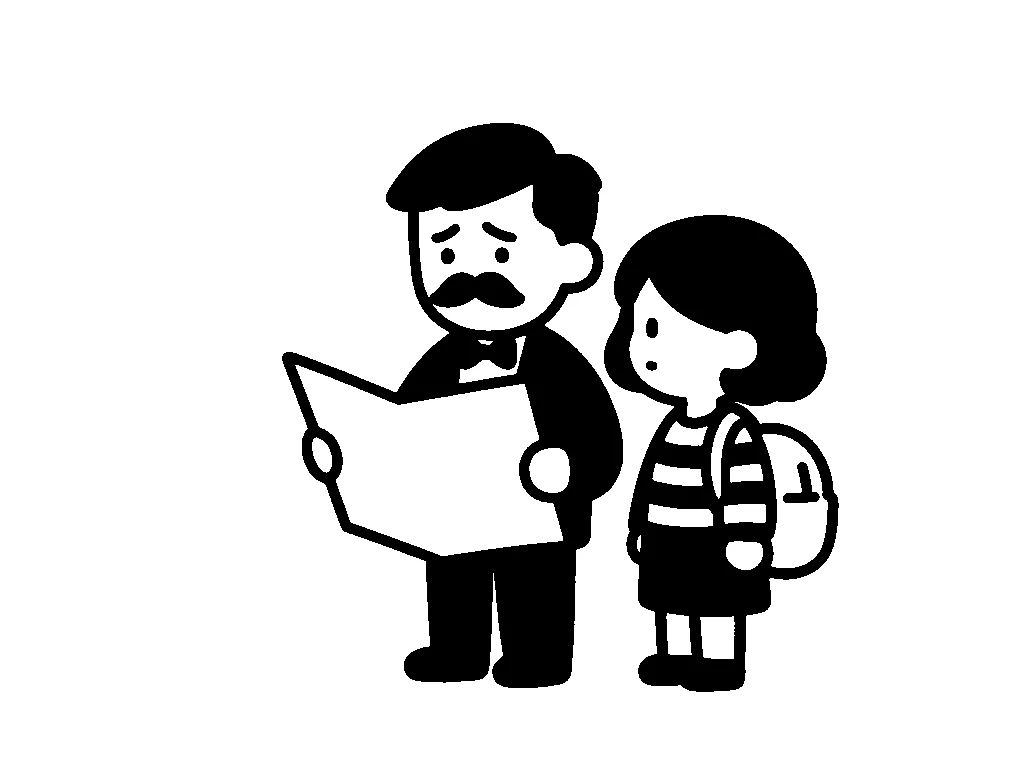
- Mia 我多带了一张地图,林先生,您要吗?
- Mr Lin 不要,我有地图。我们走吧。
- Fei 爸爸,我们是不是走错路了?
- Mia 太阳在我们后面,我们在往西走。
- Mr Lin 地图没有错。你们看,东在左边。
- Mia 我的地图上,东在右边。您的地图转一下吧。
- Mr Lin 转一下……对了!东在右边了!
- Fei 五分钟的路,我们走了二十分钟!
- Mr Lin 地图没有错,是公园出现的地方不对!
- Mia 没关系,我们到了。回去的时候,用我的地图吧。
At the park, the formal opening of the festival
- Teacher Gao 你们来了!节目已经正式开始了。
- Mia 对不起。路上很有趣,我们看了很多地方。
- Teacher Gao 没关系。今天的节目以一段京剧表演开始。
- Mia 这儿跟我想的不一样,人很多,很热闹。
- Teacher Gao 这次的文化节与去年一样丰富。
- Fei 下午还有什么节目?
- Teacher Gao 音乐表演下午三点在这儿举行。
- Fei 我们先找座位吧。
- Mia 我已经找到了,三个座位都在左边。
- Teacher Gao 好。第二节课,我们说说今天的京剧。
Mia's diary about the festival
- 今天,这座城市举办的文化节在公园举行。
- 文化节九点正式开始,以一段京剧表演欢迎大家。
- 高老师说,文化节以交流为目的。
- 今天没有第一节课,林飞最高兴。
- 可是出门的时候,林先生的地图出现了问题。
- 他的地图上东在左边,我们一直往西走。
- 五分钟的路,我们走了二十分钟。
- 公园终于出现在我们前面。
- 这次的节目与去年一样丰富。
- 我最喜欢京剧与音乐。
- 我多带了一张地图,回去的时候用上了。
- 今天真是开心的一天。
Grammar
(第) + number + 节 + 课
节 counts class periods: 一节课, 两节课, 第一节课. The number comes first and 课 follows; never use 个 for a class period. 节 also means 'festival' in compounds like 文化节 and 节日; there it is not a measure word.
- 今天没有第一节课,我们去公园。
- 第二节课十一点开始,大家准时到教室。
- 今天我们有两节课。
- 文化节在哪儿举行?
A 与 B (与……一样) · 以 + thing + verb · 以 A 为 B
In writing, 与 means 和: 京剧与音乐. 与……一样 means 'the same as'. 以 means 用 in writing: 以一段京剧开始, 'begin with a piece of Beijing opera'. 以A为B means 'take A as B': 以交流为目的. In everyday speech people prefer 和 and 用.
- 我最喜欢京剧与音乐。
- 这次的文化节与去年一样丰富。
- 今天的节目以一段京剧表演开始。
- 文化节以交流为目的。
Characters
- 举 means to lift. Its older form 舉 has 手, 'hand', at the bottom. 举行 'holds' an event the way you lift something up for everyone to see.
- 办 means to handle or get something done, and that takes effort, so 力 sits inside. 举办 puts the two together: lift it up and do the work to host it.
A saying
南辕北辙 Literally: the cart's shafts point south but the wheels run north. A man wants to go south, yet drives his cart north. People say it when someone's actions take them away from their goal, like walking west with a map that is the wrong way round.
What you will be able to say
The lesson ends with a talk. Xiaolu is asking about the city's culture festival. Tell her where it is held, say which class period is cancelled, and describe the programme.
- I can say where or when an event is held with 举行. 文化节在公园举行。
- I can count class periods with 节: 第一节课, 两节课. 今天我们有两节课。
- I can use the formal 与 and 以: 京剧与音乐, 以……开始. 文化节以一段京剧表演开始。
- I can say a programme is rich with 丰富. 这次的节目很丰富。
- I can say who hosts an event with 举办. 这座城市在公园举办文化节。
The closing talk needs an account. On the free plan, the first lesson talk you take in each level is free; Plus and Ultimate use the month's Talk minutes.
This lesson is in Plus. Start this lesson